 English
 Deutsch
 Español
 Tiếng Việt
 русский
 عربى

How Are Wire Harnesses Designed, Manufactured and Customized for Different Applications?
Content
A wire harness is one of those components that quietly decides whether a product feels reliable. You may not see it, but it carries power and signals through every corner of a machine, vehicle, or medical device. At its core, a wire harness is an organized assembly of cables, wires, terminals, connectors, and protective materials that turns a loose bundle of conductors into a single, installable unit. The difference between a harness that lasts for years and one that fails early usually comes down to design choices, material selection, and how carefully the assembly is built and tested.
Our team at JIAXING NT ELECTRONIC TECHNOLOGY has spent years building harnesses for automotive, medical, industrial, smart home, and electronic applications. We have learned that the best harness is not the most complicated one. It is the one that fits the space, survives the environment, and can be produced consistently. This guide walks through what a wire harness does, how it is designed and manufactured, and what to consider when choosing a partner for a custom build.
What a Wire Harness Really Does
At a basic level, a harness groups multiple conductors into a controlled route. Instead of running individual wires one by one, a technician installs a single assembly with pre-terminated ends, labeled branches, and the right connectors already in place. That saves time on the line, reduces wiring mistakes, and makes maintenance far easier. It also protects the conductors from vibration, abrasion, heat, moisture, and accidental contact.
A typical harness includes several layers of engineering:
- Conductors sized for current, voltage drop, and flexibility
- Terminals and connectors matched to the mating interface and cycle life
- Insulation, sleeving, tapes, and overmolds that protect against the environment
- Routing features such as clips, grommets, breakouts, and strain relief
- Labels, keying, and polarity features that prevent incorrect installation
When these elements work together, the harness becomes more than a bundle of wires. It becomes a reliable subsystem that supports the product throughout its service life.
Design Decisions That Shape the Finished Harness
Every harness starts with the electrical requirement. The wire gauge must carry the expected current without excessive heat, and the insulation must handle the operating voltage. But electrical sizing is only the beginning. A harness that works on a bench may fail in a vibrating engine bay or a medical device that is cleaned daily.
We look closely at the operating environment. Temperature range affects insulation and terminal materials. Flexing and movement call for stranded conductors and appropriate strain relief. Moisture and dust may require sealed connectors, heat-shrink boots, or IP-rated assemblies. Electromagnetic interference may call for shielded cables, twisted pairs, or ferrite components. Mechanical constraints matter too: bend radius, routing space, connector orientation, and the force needed to mate each connection.
Standards and market requirements also guide the design. Depending on the destination, a harness may need to align with IEC, UL, VDE, SAE J1939, or other application-specific conventions. The goal is not to add complexity for its own sake, but to choose the simplest construction that meets the electrical, environmental, and regulatory demands of the project.
How We Turn a Drawing into a Production Harness
A good harness is easy to assemble and hard to assemble incorrectly. That principle guides our process from the first drawing review to the final inspection. Our manufacturing capabilities cover wire cutting, stripping, crimping, soldering, assembly, injection molding, and testing, with production lines organized by product type.
- Review the schematic, harness drawing, connector list, and operating conditions.
- Build a prototype or first article to confirm fit, routing, and terminal selection.
- Prepare fixtures, labels, and process instructions for repeatable assembly.
- Cut, strip, crimp, and verify conductors before final assembly.
- Assemble branches, add protection, and route the harness to the drawing.
- Test continuity, polarity, withstand voltage, and other agreed criteria.
- Inspect the finished harness and pack it for safe transport.
Our factory covers roughly 10,000 square meters and includes around 30 production lines, automated wire harness equipment, injection molding equipment, and a range of test instruments. With more than 300 employees, we can support both recurring production and custom projects that need engineering input along the way. Quality is not a final step; it is built into each stage through process control and testing.
Matching the Harness to the Application
Different industries ask different things of a harness. An automotive harness must survive vibration, heat, and moisture while fitting into tight routing spaces. A medical harness must support reliable signals and safe power delivery in equipment that may be cleaned and handled frequently. An industrial harness must resist oil, motion, and electrical noise while remaining serviceable.
For electric vehicles and automotive systems, we build assemblies for battery management, high-voltage power distribution, engine management, diagnostics, lighting, and auxiliary circuits. A representative example is our BMS assembly harness, which combines connectors, terminals, and protective materials for the battery management environment.
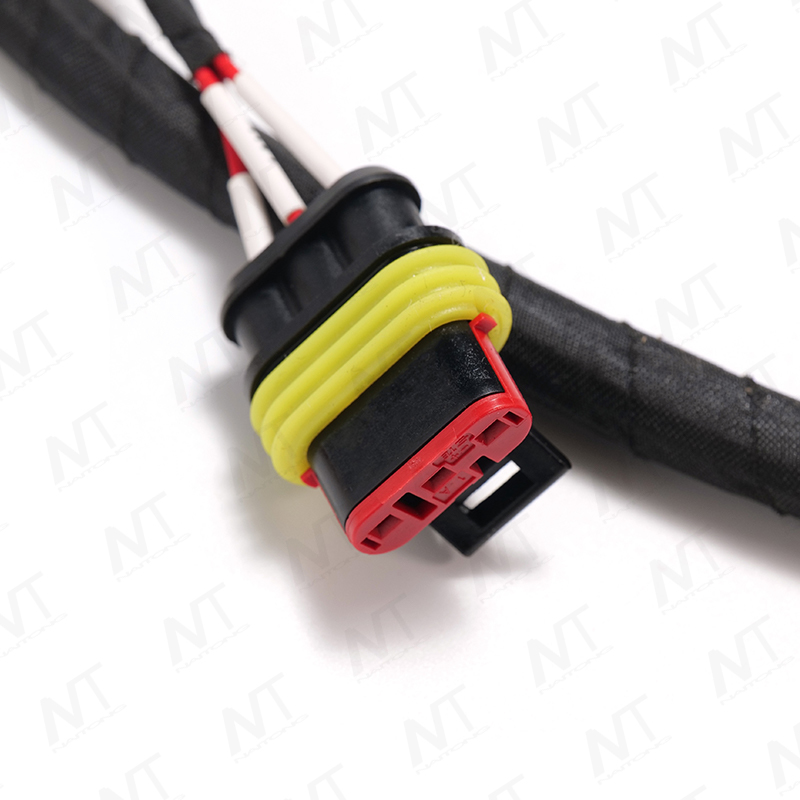 New Energy Vehicle BMS Assembly Wire HarnessLow-voltage battery management harness for cell voltage/temperature sensing, CAN/LIN communication, high-voltage safety monitoring, and contactor control in new energy vehicles.View Product →
Medical devices call for a different balance. Conductors must be stable, connectors must mate securely, and materials must suit the cleaning and handling routines of the device. Our medical harness work includes ECG lead wires, internal device harnesses, power and signal assemblies, and waterproof connector-to-RJ45 signal leads.
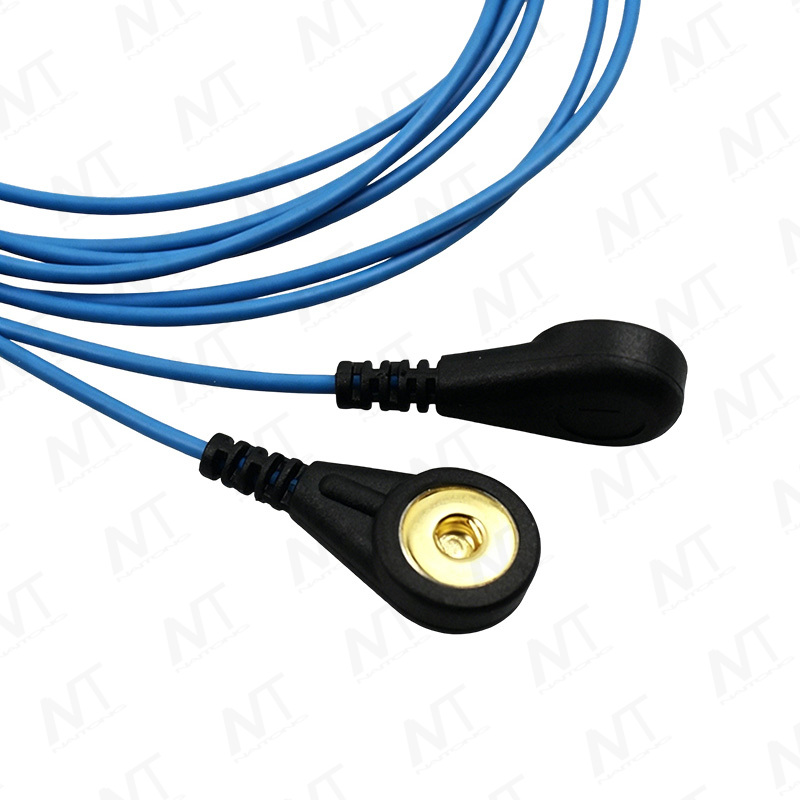 ECG Bioelectrode Snap Lead Wire HarnessMedical lead wire with 4.0mm gold-plated snap connectors for stable ECG, EMG, and EEG weak-signal acquisition in monitors and electrocardiographs.View Product →
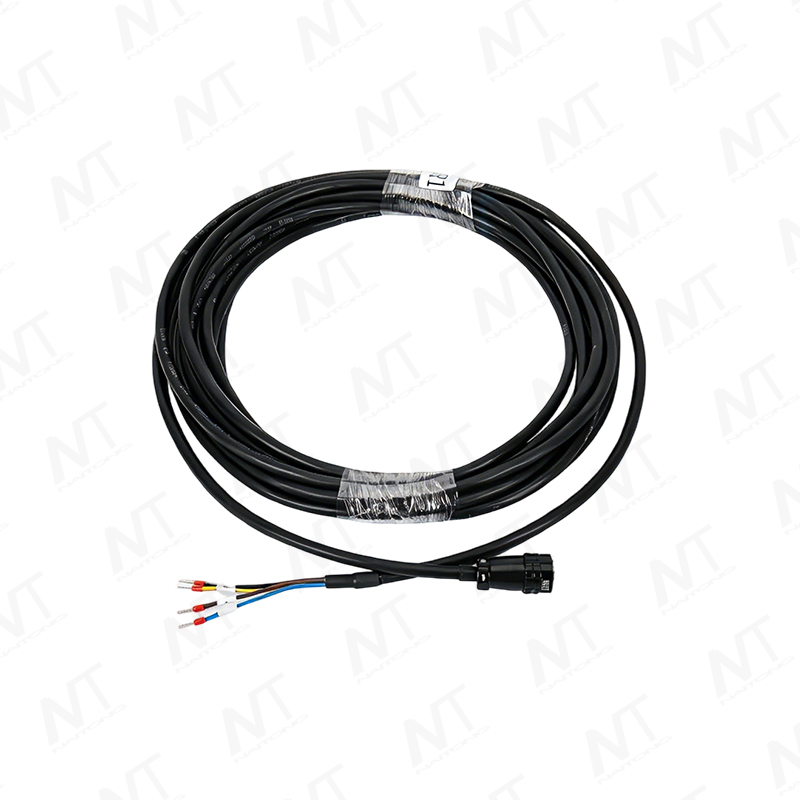
Industrial equipment often needs harnesses that can follow moving axes, carry encoder feedback, and survive exposure to coolant or oil. Servo motor power cables and encoder signal cables are a good example of how power and feedback routes must be kept separate while sharing the same motion profile.
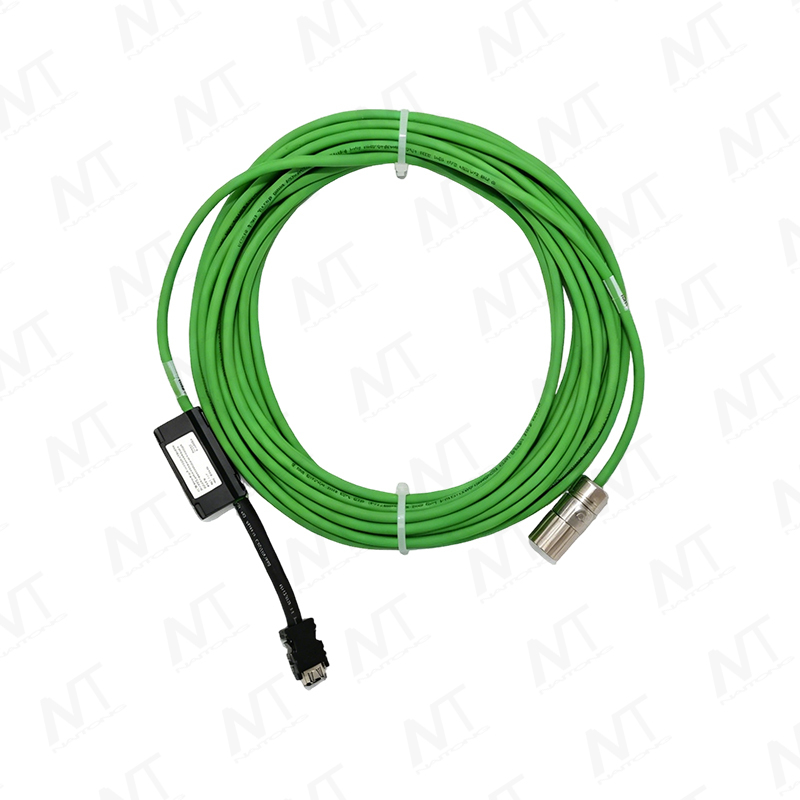 Custom Servo Motor Power and Encoder Signal Cable HarnessHigh-flex servo power cable and dedicated encoder signal cable for robots, CNC machines, and automation, with oil-resistant drag-chain construction and closed-loop feedback.View Product →
The table below offers a quick reference across the harness families we commonly build.
| Harness family | Typical connections | Key design concerns |
|---|---|---|
| Automotive and EV | Engine, ECU, BMS, charging, lighting, diagnostics | Vibration, heat, moisture, long service life |
| Electronic | Switches, buttons, battery packs, grounding, ribbon | Compact routing, current capacity, strain relief |
| Industrial control | Servo drives, encoders, sensors, control cabinets | EMI, oil, motion, IP protection |
| Medical | ECG leads, device internals, power and signal | Cleanability, reliability, patient safety |
| Signal and data | USB, RJ45, D-sub, coaxial, M12 | Impedance, shielding, data integrity |
| Smart home | DC power distribution, LED strips, sensors | Polarity, connector fit, compact size |
| AC power and wire | Power cords, appliance leads, equipment wiring | Regional standards, insulation, flex life |
Custom or Standard: Choosing the Right Path
Some projects can start from an existing harness family and adapt connector types, lengths, or branch layouts. Others need a ground-up design because the routing space, environment, or signal requirements are unusual. Both paths are valid, but they need different levels of engineering support.
If you are unsure where your project fits, start with the connection list and the operating conditions. A short review of the mating connectors, wire gauge, expected movement, and cleaning or sealing requirements is usually enough to identify the feasible options. From there, a prototype can confirm fit and assembly sequence before production tooling is committed. Our OEM/ODM support is built around this kind of practical collaboration, from initial drawings to repeatable production.
Questions Worth Asking Before You Order
What environment will the harness see?
Temperature, moisture, vibration, chemicals, and flexing all influence the materials and connectors. A harness designed for a dry control cabinet should not be expected to survive an engine bay without changes.
How will the harness be installed and serviced?
Routing space, bend radius, connector access, and keying all affect assembly time and error rates. Small design choices, such as adding a label or changing a connector orientation, can make a real difference on the line.
What does the test plan need to prove?
Continuity and polarity are the baseline. Depending on the application, you may also need withstand voltage, insulation resistance, pull force, dimensional checks, or functional testing. Agreeing on these criteria early prevents surprises later.
A wire harness is a small part of a larger product, but it touches almost every function. Good harnesses are not judged by how they look on a drawing. They are judged by how they perform after thousands of cycles, temperature swings, and service interventions. That is why we focus on practical design, consistent assembly, and testing that reflects the real application. Whether you are developing a new electric vehicle subsystem, a medical device, an industrial control cabinet, or a smart home product, the right harness partner should make the connection simpler, not more complicated.
Recommended Products
Contact Us
 Cooperate with us

Contact Us
-

Telephone:
+86-0573–82791220
+86-0573-83981882
-

Mobile phone:
+86-13736458379
+86-17506661888
-

Email:
shawn.p@jxnaitong.com
ft01@jxnaitong.com
george.cao@jxnaitong.com
-

Address:
No. 2889 Zhongshan West Road, Jiaxing City, Zhejiang Province, China
Factory C7.05, Plot C-7-CN, N17 Road, Bao Bang Industrial Zone Expansion, Bao Bang Village, Ho Chi Minh City, Vietnam.
Copyright © JIAXING NT ELECTRONIC TECHNOLOGY CO., LTD. Custom Wire Harness Solutions Cable Harness Manufacturers OEM/ODM Wire Harness Factory
