 English
 Deutsch
 Español
 Tiếng Việt
 русский
 عربى

Electronic Wire Harness: Design, Types, and Custom Manufacturing Guide
Content
An electronic wire harness is one of those parts that rarely gets noticed until something goes wrong. It sits behind a control panel, inside a medical cart, under a vehicle dashboard, or within a smart-home hub, carrying power and signals through a carefully organized bundle of wires, terminals, and connectors. In our experience, the difference between a dependable harness and a troublesome one usually comes down to design detail, material choice, and process discipline rather than any single component.
At Jiaxing NT Electronic Technology, we have been designing and manufacturing wire harnesses and cable assemblies since 2013. That background shapes how we look at the topic: not only as an engineering drawing, but as something that has to be built consistently, tested sensibly, and installed without surprises. For a broader walk-through of design stages and customization options, our electronic wire harness guide is a useful starting point.
What Is an Electronic Wire Harness?
An electronic wire harness is an assembly of wires, cables, connectors, terminals, and protective materials arranged to transmit electrical power or signals between components. It may be as simple as a two-wire lead with a connector on one end, or as complex as a multi-branch assembly with dozens of circuits, splices, labels, shields, and sealed connectors.
People sometimes use “cable assembly” and “wire harness” interchangeably, but there is a practical difference. A cable assembly usually refers to a cable with connectors terminated at one or both ends. A wire harness often involves a more complex routing structure: a main trunk, breakouts to different devices, varying wire gauges, and several connector families in one assembly. The harness is designed as a system so that installation becomes faster and more repeatable.
Most harnesses share a few basic building blocks:
- Conductors in the right gauge and strand count for current, voltage drop, and flexibility.
- Insulation and jacketing selected for temperature, abrasion, chemicals, and flame requirements.
- Connectors, terminals, and splices matched to the mating interface and production process.
- Protective parts such as tubing, sleeving, tape, grommets, and heat-shrink to manage routing and wear.
- Labels, keying, and color coding that help technicians install and service the assembly correctly.
Design Details That Matter
A harness drawing can look complete and still cause problems in production or in the field. The details we review most carefully are current-carrying capacity, voltage drop, connector rating, bend radius, strain relief, vibration exposure, moisture, and electromagnetic interference. A wire that is electrically adequate may still fail if it is routed too tightly around a sharp edge or if the connector cannot tolerate the mating cycles expected by the customer.
Electrical and mechanical checks
Circuit length affects resistance and voltage drop, especially in low-voltage control and power distribution. Wire gauge should be selected from the actual load and ambient temperature, not from habit. Mechanically, the harness needs enough slack for assembly and service, but not so much that it rubs against nearby parts. Connector orientation, latch access, and label placement are small decisions that become very visible on a production line.
Material and connector choices
PVC, XLPE, silicone, PTFE, and other insulation materials behave differently under heat, flexing, and chemical exposure. Terminal plating and connector housing material also matter in humid or corrosive environments. When a project calls for UL, IEC, VDE, or automotive-style constructions, the material set and test plan should be agreed early. That is far easier than changing a released harness after tooling and validation are complete.
Common Electronic Wire Harness Types
| Harness type | Typical construction | Common applications |
|---|---|---|
| Single-ended lead harness | Discrete wires, crimped terminals, one connector, protective sleeving | Switches, sensors, internal device wiring, grounding |
| Ribbon cable harness | Flat ribbon cable, IDC or crimp connectors, folded routing | Compact signal routing, displays, control boards |
| Multi-branch harness | Main trunk with breakouts, splices, labels, and several connectors | Control cabinets, automotive body circuits, industrial equipment |
| Shielded data harness | Twisted pairs, foil or braid shield, shielded connectors | USB, Ethernet, sensor, audio, and RF signal paths |
| High-current battery harness | Thick conductors, ring terminals, fuse holders, heat-shrink | Battery packs, e-bikes, power distribution, charging systems |
| Sealed or waterproof harness | Sealed connectors, grommets, potting, adhesive heat-shrink | Outdoor equipment, vehicles, medical devices, washdown areas |
Ribbon cable assemblies are a good example of how form follows function. When space is tight and many low-power signals need to travel together, a flat cable can simplify routing and keep conductors organized. We build ribbon cable harnesses for control boards, displays, and compact electronic devices where a round bundle would be too bulky.
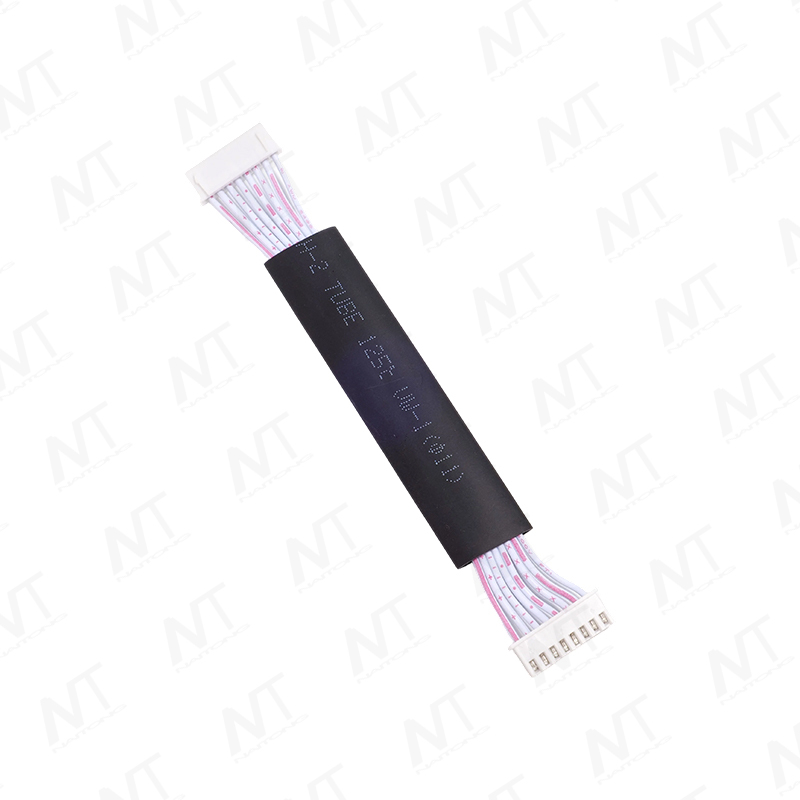 Custom Ribbon Cable Wire HarnessFlat ribbon cable harness for compact multi-signal routing, with customizable conductor count, pitch, length, and IDC or FFC connectors.View Product →
Small control harnesses are another everyday category. A panel switch, indicator light, or button may need a short lead with a connector on one end and crimped terminals on the other. These assemblies look simple, but terminal selection, pull strength, and insulation placement still determine whether they survive repeated use.
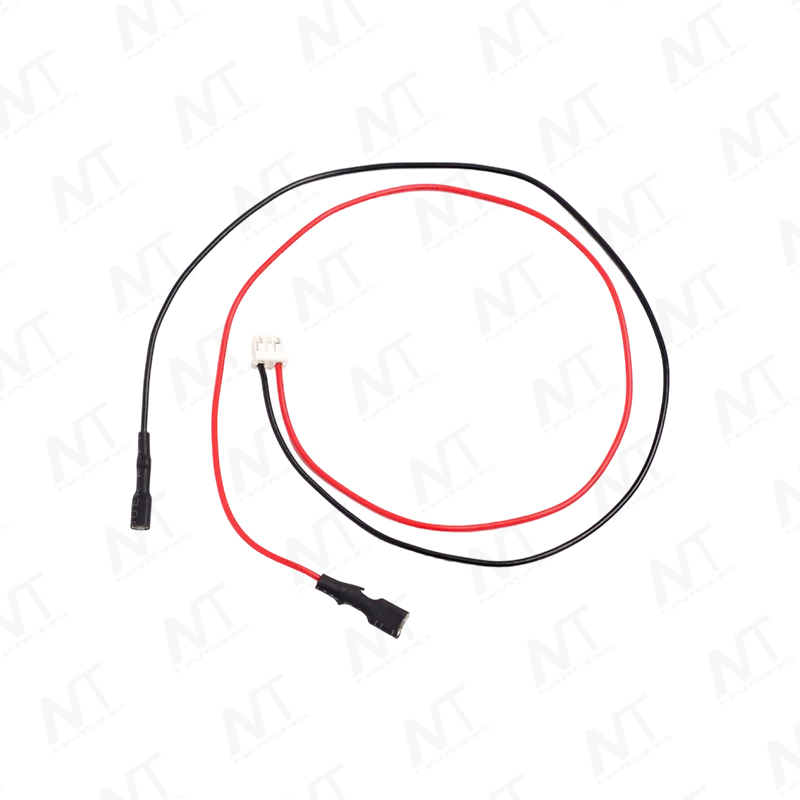 XH 3-Pin to Spade Terminal Adapter HarnessAdapter harness converting a standard 2.54 mm XH 3-pin connector to a spade terminal for power or signal connections in compact devices.View Product →
Applications Across Industries
Automotive and electric vehicles
Vehicle harnesses must tolerate vibration, temperature swings, moisture, and long service life. Typical assemblies include engine and sensor harnesses, dashboard and ECU connections, battery management system harnesses, high-voltage power harnesses, and diagnostic cables such as OBD and SAE J1939 types. In electric motorcycles and EVs, low-voltage control harnesses and high-voltage assemblies often share the same vehicle, so clear routing and connector keying become especially important.
Medical devices
Medical harnesses often combine fine signal wires with larger power conductors inside a compact device. ECG lead wires, internal device harnesses, D-sub signal assemblies, and waterproof connector cables all demand careful strain relief and consistent crimp quality. Cleanliness, traceability, and repeatable inspection matter as much as electrical performance.
Industrial automation and energy
Industrial equipment uses harnesses for servo power, encoder feedback, digital input and output signals, control cabinets, sensors, and communication interfaces. High-density signal transmission assemblies help reduce wiring errors and make maintenance more manageable. In these environments, shielding, labeling, and connector locking are often just as important as current rating.
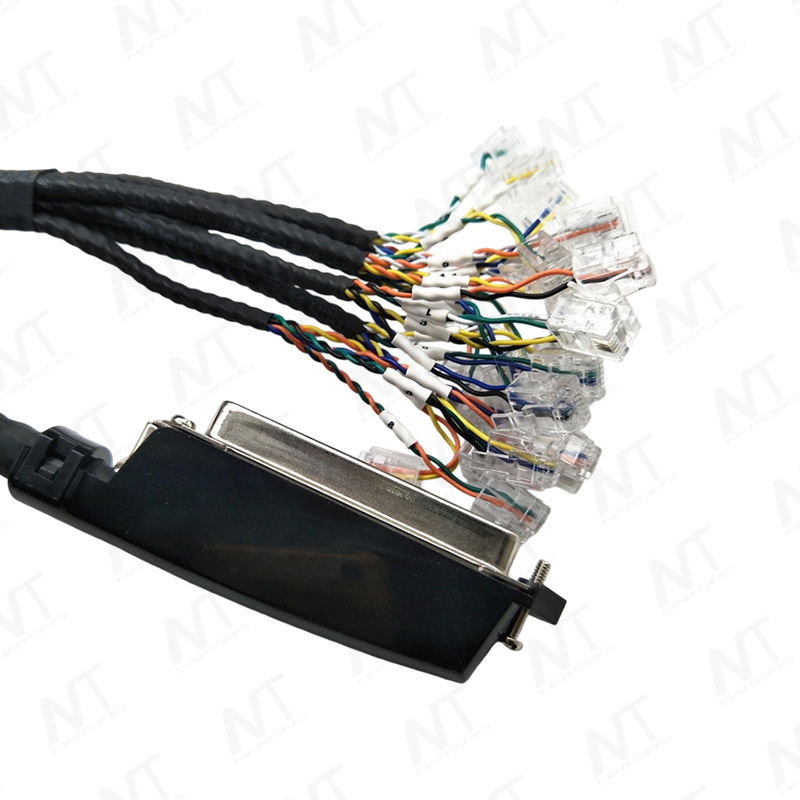
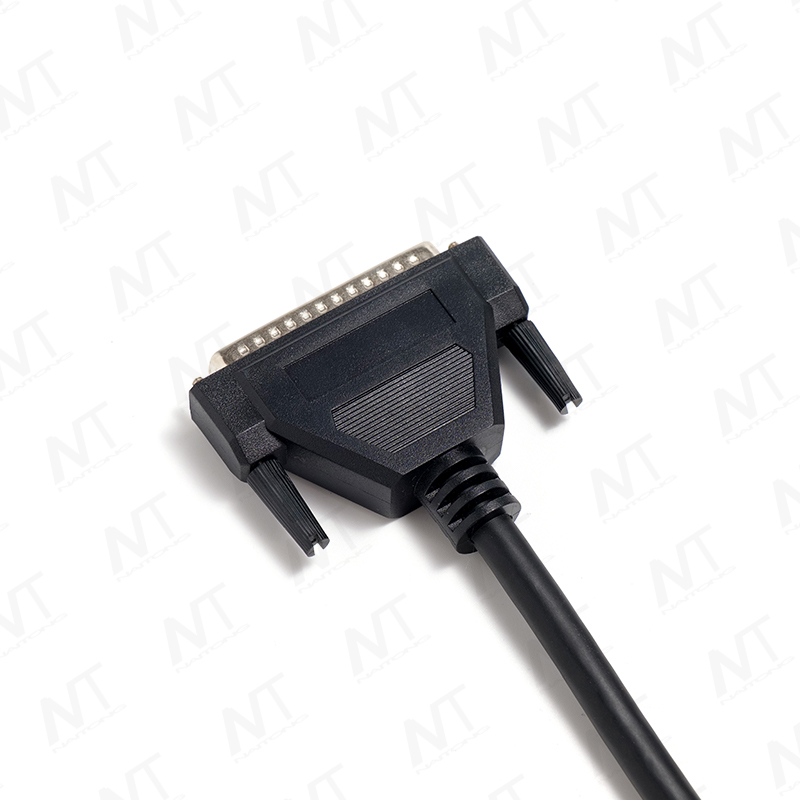 NT-GK26034 High-Density Industrial Signal HarnessShielded SCSI/DB dual-ended harness with locking screws and gold-plated pins for industrial automation signal transmission and maintenance-friendly wiring.View Product →
Smart home and signal/data systems
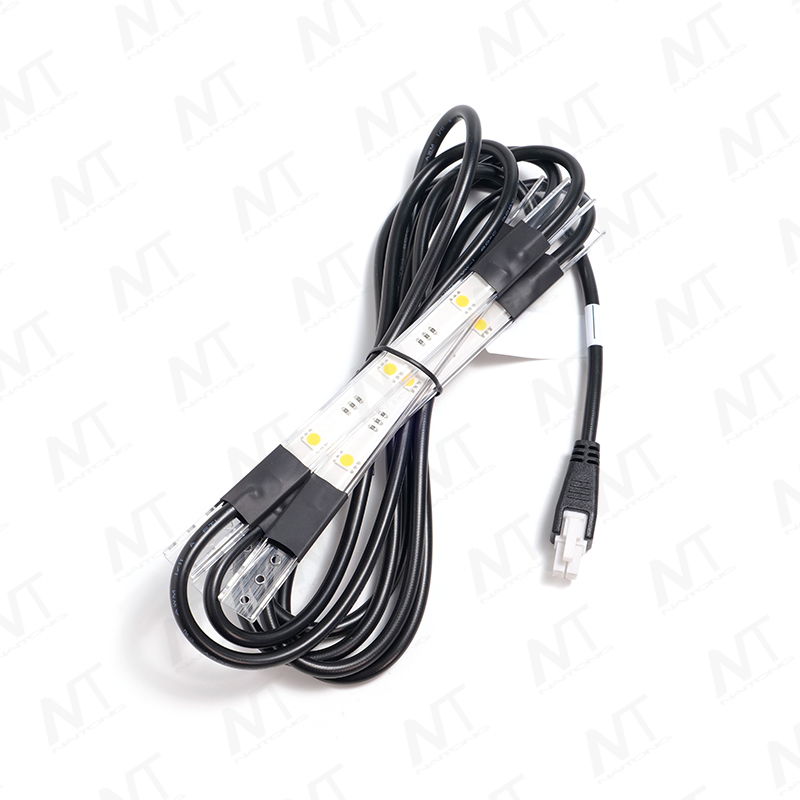
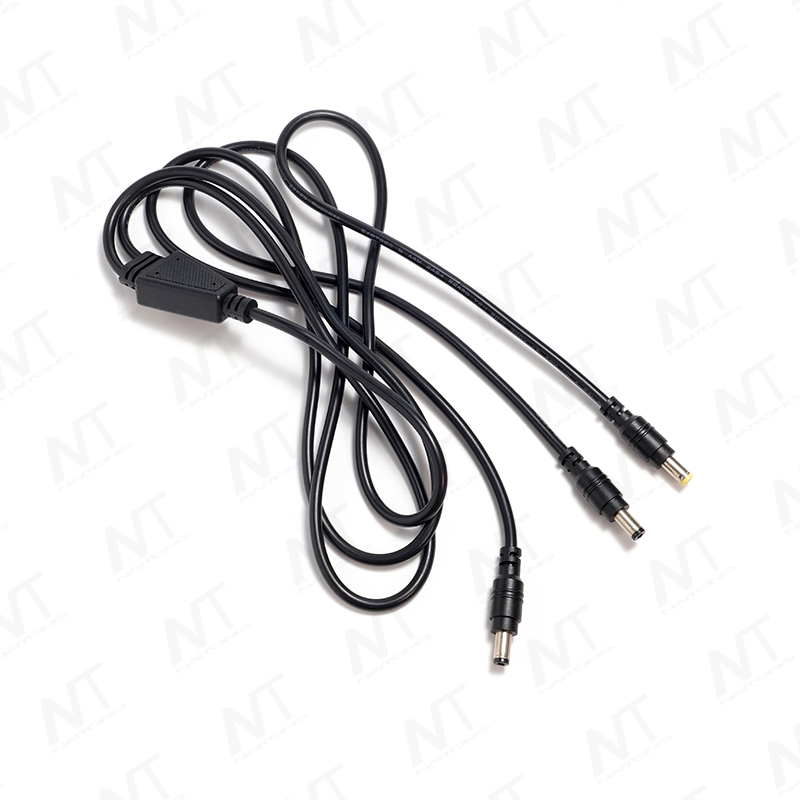
Smart-home devices use DC power distribution harnesses, LED strip and sensor leads, RJ11 signal splitters, and compact Y-type cables. Signal and data harnesses cover USB, RJ45, M12, D-sub, audio, and coaxial assemblies. Each application has its own priorities: plug retention for consumer devices, shielding for data lines, and flexibility for equipment that moves or bends during use.
How to Specify the Right Harness
A clear specification saves time for everyone. Before requesting a quote, gather the following information and mark anything that is still open for discussion:
- Define the function: power, signal, grounding, sensing, or a combination.
- List every connector, terminal, and mating interface, including keying and orientation.
- State voltage, current, signal type, and any shielding or impedance requirements.
- Describe the environment: temperature, moisture, vibration, chemicals, and expected movement.
- Provide routing constraints such as length, bend radius, breakout positions, and label locations.
- Agree on validation tests, inspection criteria, packaging, and documentation.
- Confirm volume expectations and whether prototypes or small production runs are needed first.
When drawings are incomplete, a sample and a short description of the installation can be more useful than a long email. A good harness manufacturer will ask about the parts around the harness, not just the harness itself.
Manufacturing and Quality Control
Our plant in Jiaxing covers about 10,000 square meters and runs 30 product-specific production lines, with more than 300 employees, automated harness equipment, injection molding, and a range of test instruments. That setup lets us work across electronic harnesses, automotive and EV harnesses, industrial control cables, medical harnesses, signal data cables, smart-home harnesses, AC power cords, and standard wires and cables.
Good manufacturing starts before the first wire is cut. We review the drawing for crimp access, wire dress, connector spacing, and testability. Incoming materials, crimp height, pull force, continuity, and final appearance are checked against the agreed plan. Where a project needs special tests, we discuss the method and acceptance criteria up front rather than discovering a gap at the end.
Working With a Manufacturing Partner
Harness projects rarely stay static. A connector may become unavailable, a device may be redesigned, or a product may move from prototype to volume production. Having engineering and production under one roof makes those transitions easier to manage. We support OEM and ODM harness programs and operate factories in China and Vietnam, which gives customers options when regional supply or volume planning changes.
The most productive customer relationships tend to be the ones where information flows early. Send the drawing, the sample, the target volume, and the working environment. Ask questions about tolerances and test methods. A harness is a small part of the total product, but it can influence assembly time, field reliability, and service cost for years.
Practical Takeaways
A reliable electronic wire harness is not simply a bundle of wires selected from a catalog. It is a designed assembly that matches the electrical load, the mechanical environment, the connector system, and the production process. Start with a clear function and interface list, choose materials for the real operating conditions, and agree on inspection and validation before release. When those steps are handled with care, the harness does its job quietly, which is exactly what it should do.
Recommended Products
Contact Us
 Cooperate with us

Contact Us
-

Telephone:
+86-0573–82791220
+86-0573-83981882
-

Mobile phone:
+86-13736458379
+86-17506661888
-

Email:
shawn.p@jxnaitong.com
ft01@jxnaitong.com
george.cao@jxnaitong.com
-

Address:
No. 2889 Zhongshan West Road, Jiaxing City, Zhejiang Province, China
Factory C7.05, Plot C-7-CN, N17 Road, Bao Bang Industrial Zone Expansion, Bao Bang Village, Ho Chi Minh City, Vietnam.
Copyright © JIAXING NT ELECTRONIC TECHNOLOGY CO., LTD. Custom Wire Harness Solutions Cable Harness Manufacturers OEM/ODM Wire Harness Factory
